Crash, Burn, and Come Back Stronger: The Counterintuitive Power of Streaming in Public
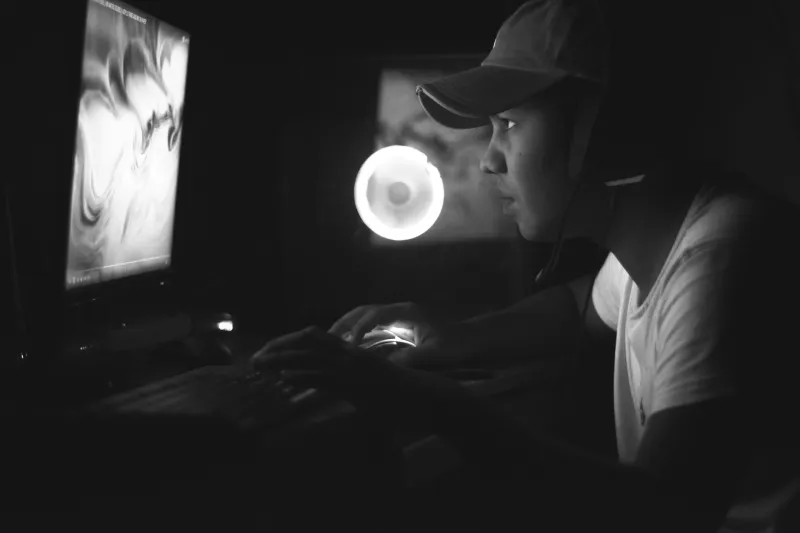
There's a specific kind of cringe that hits when your stream drops mid-sentence, your mic cuts out during what was supposed to be your biggest reveal, or you spend forty-five minutes trying to fix an OBS setting while your chat watches in real time. Every instinct screams: end the broadcast, delete the VOD, pretend this never happened.
But what if that instinct is exactly wrong?
A growing number of streamers — some with massive followings, others still grinding their way up — are starting to treat their worst moments not as liabilities to hide, but as raw material for something more valuable than highlight reels: genuine human connection.
The Myth of the Perfect Stream
We've been sold this idea that audiences want polished. That they're tuning in for entertainment, and entertainment means competence, confidence, and content that flows without friction. And sure, production quality matters to a point. Nobody's sticking around for audio that sounds like it was recorded inside a washing machine.
But there's a ceiling on what polish alone can do for you. Once your setup is clean enough, your lighting decent enough, your pacing smooth enough — you've basically matched everyone else at that tier. You've become competent. And competent doesn't make people feel anything.
What actually makes people feel something? Watching another human being navigate something hard in real time.
The streamer who laughs at their own technical disaster instead of rage-quitting. The one who admits mid-stream that the game they promised to play just isn't landing the way they hoped. The one who sits in the awkward silence after a bit that absolutely did not work and just... owns it. Those moments aren't interruptions to the content. For a lot of viewers, those are the content.
Why Failure Reads as Trust
Here's the thing about curated perfection: it creates distance. When everything someone puts out is flawless, audiences start to sense — consciously or not — that they're watching a performance, not a person. And performances are easy to walk away from.
But when a streamer visibly struggles? When the plan falls apart and they handle it with grace, or even just with honesty? That's when something shifts. Viewers stop feeling like spectators and start feeling like witnesses. There's a difference, and audiences can feel it.
Psychologists have a name for a piece of this: the pratfall effect. The basic idea is that people who appear highly competent actually become more likable when they make mistakes — because the mistake signals that they're human, not just a highlight reel walking around in a person suit. For streamers, this effect gets amplified because the mistake happens live, unedited, in front of everyone.
You can't fake a real flop. And audiences know that.
The Loyalty That Comes From Surviving Together
Ask almost any streamer with a deeply loyal community about the moments that cemented those bonds, and you'll hear a surprising number of stories about things going wrong. The stream that crashed three times and the chat that stuck around through all three reboots. The creative experiment that flopped hard and the audience that helped them debrief it afterward. The awkward, off-script moment that somehow became an inside joke that's still referenced months later.
There's something about shared adversity — even low-stakes, streaming-flavored adversity — that accelerates the feeling of community. When chat rallies around a struggling streamer, they're not just being nice. They're participating. They have a role. And people are loyal to things they've invested in.
That's the paradox nobody talks about enough: the streamer who never struggles never gives their audience a chance to show up for them. And showing up for someone is one of the fastest ways humans form attachment.
Normalizing the L Without Wallowing In It
There's an important distinction worth making here. Embracing your failures publicly doesn't mean performing victimhood or turning every stream into a therapy session about how hard everything is. Audiences aren't looking for someone to rescue — they're looking for someone real to connect with.
The streamers doing this well tend to share a few qualities. They're self-aware enough to recognize when something's gone sideways. They don't spiral into defensive excuses or aggressive self-criticism. And they move through the moment rather than camping in it. A quick "well, that did not go as planned" and a pivot forward hits very differently than a twenty-minute meltdown about technical difficulties.
The goal isn't to make failure your brand. It's to make honesty your brand, and let failure be one of the things you're honest about.
Freedom Sounds Like Admitting You Don't Have It Together
This is where the streaming landscape is quietly splitting into two camps. On one side, you've got creators optimizing every variable — chasing the algorithm, maintaining a persona, protecting their image at all costs. On the other, you've got people who've decided that the freedom to be genuinely themselves — messy, uncertain, occasionally falling completely flat — is worth more than any amount of polish.
And audiences are voting with their time and their loyalty. Consistently.
There's something almost radical about going live without a safety net. No script, no guarantee the tech will cooperate, no certainty that the bit will land. Just a person showing up and letting whatever happens be enough. That kind of courage — and it is courage, even if it doesn't look like it — resonates in a way that perfectly produced content rarely does.
Your Worst Stream Might Be Your Best Investment
So the next time your stream implodes, before you scrub the VOD and vow to never speak of it again — pause. Consider what actually happened. Did your chat stick around? Did they laugh with you? Did they offer help, or commiserate, or just stay in the room while things fell apart?
If the answer is yes to any of that, you didn't fail. You gave your audience something a highlight reel never could: proof that you're a real person, navigating real imperfection, in real time.
That's not a bug in your streaming career. That might be the whole point of it.