Forget the Formula: How Streamers Are Winning by Just Being Weirdly Themselves
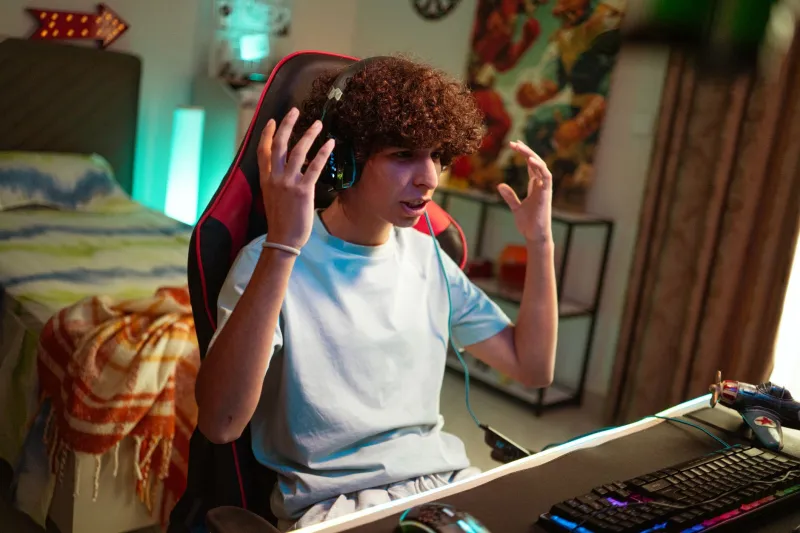
Somewhere along the way, streaming started to feel a little like homework.
Thumbnail A/B testing. Upload schedules calibrated to the minute. Titles engineered with surgical keyword precision. For a while, it seemed like the only way to grow was to become fluent in the language of the algorithm — to think less like a person and more like a machine learning model trying to predict what a machine learning model would reward.
But something interesting is happening. A growing number of streamers are quietly — and sometimes loudly — walking away from all of it. They're posting when they feel like it, keeping the weird tangents in, skipping the color-graded thumbnails, and refusing to sand down the rough edges of who they actually are. And their audiences? Bigger and more devoted than ever.
So what's going on?
The Optimization Trap Nobody Talks About
Here's the thing about chasing the algorithm: it works, until it doesn't. You can spend months reverse-engineering what gets pushed to the front page, only to wake up one morning and find the whole system has reshuffled itself. Creators who built their entire strategy around a particular format or posting cadence know this feeling well — the rug pull is real, and it's brutal.
But there's a subtler cost that doesn't get talked about as much. When you optimize everything, you start optimizing yourself out of your own content. The spontaneous rant that might've made someone's day? Cut because it didn't fit the thumbnail concept. The offbeat hobby you were genuinely excited about? Shelved because the niche didn't have enough search volume. Over time, the content gets cleaner and more consistent — and somehow, less watchable.
Viewers notice. They might not be able to articulate it, but they can feel when someone's performing versus actually present. And in a media landscape absolutely drowning in content, that feeling of genuine presence is rare enough to be magnetic.
Personality Is the One Thing the Algorithm Can't Copy
Ask someone why they keep coming back to their favorite streamer, and you'll rarely hear them say something like, "Great metadata strategy." What you'll actually hear: She just feels like a real person. He's hilarious but you never know why. I feel like I know them.
That's the thing about authentic personality — it's inherently unpredictable, and unpredictability is one of the few things the algorithm genuinely can't manufacture or replicate. The way a streamer laughs at their own jokes before they finish telling them. The random tangents about their cat or their complicated feelings about a fast food chain. The moments where something genuinely surprises them on screen and you can see it happen in real time.
Those are the moments that build communities. Not because they're optimized, but because they're true.
Streamers who've stopped chasing the formula often describe a kind of creative relief — a loosening up. And that looseness shows. Content starts to feel more alive. The audience, sensing the shift, leans in.
The Loyal Few vs. The Massive Many
One reframe that's helped a lot of personality-first creators is letting go of the obsession with raw numbers. The algorithm is essentially a reach machine — it's designed to push content to as many people as possible. But reach and loyalty are very different things, and for a lot of streamers, a tight community of a few thousand genuinely invested people is worth more — emotionally, financially, and creatively — than a million passive views.
This is especially visible on platforms built around live interaction, where the comment section isn't just a metric — it's a conversation. When a streamer builds around their actual personality rather than a trend-chasing persona, the people who show up tend to be there for them, not just for the content type. If the streamer pivots, tries something new, has an off day — the loyal crowd stays. That kind of stickiness is almost impossible to manufacture through optimization alone.
Some creators have started talking about this openly, framing their audience not as followers or subscribers but as a kind of ongoing group chat with people who actually get them. That framing matters — it changes how they create, how they interact, and how they think about growth.
Messiness as a Feature, Not a Bug
There's a cultural undercurrent here that's worth naming. American audiences have had a front-row seat to decades of hyper-produced media — network TV, polished YouTube, algorithmic social feeds designed to feel seamless. And there's a real hunger, especially among younger viewers, for something that feels less engineered.
Live streaming tapped into that hunger early. The dropped frames, the awkward silences, the unexpected moments where reality intrudes — these aren't problems to be fixed. For a lot of viewers, they're the whole point. They signal that what they're watching is real, or at least real enough to feel different from everything else.
Streamers who embrace that messiness — who don't cut the stumbles or the tangents or the moments where they genuinely don't know what to say — are essentially making a bet that human imperfection is more compelling than manufactured polish. More and more, that bet is paying off.
What It Actually Takes to Go Personality-First
None of this is a knock on strategy. Knowing your audience, showing up consistently, being thoughtful about how you present yourself — all of that still matters. The shift isn't about throwing every tool out the window. It's about getting the priority order right.
Creators who are thriving on personality tend to share a few common traits. They're genuinely curious — about their interests, about their audience, about random things that catch their attention. They're comfortable with uncertainty, both in their content and in their growth trajectory. And they've made peace with the fact that not everyone is going to get them — and that's fine, because the people who do are going to stick around for a long time.
Maybe most importantly, they create from a place of expression rather than performance. They're not asking "what does the algorithm want?" They're asking "what do I actually want to talk about today?" And they trust that if they're genuinely into it, someone else will be too.
The Algorithm Doesn't Know You — But Your Audience Does
At the end of the day, every streaming platform's recommendation system is doing its best to predict human behavior at scale. It's impressive technology. But it's still just pattern recognition — it can tell you what worked before, not who you are.
Your audience, the people who show up stream after stream and actually engage, they know you in a way no algorithm ever will. They've seen you in a bad mood and stuck around. They've watched you figure something out in real time. They know your opinions on things that have nothing to do with your content niche.
That relationship — chaotic, unoptimized, deeply human — is the thing worth building. And the streamers who've figured that out are having more fun, building stronger communities, and honestly? Sleeping a lot better than the ones refreshing their analytics at midnight.
Stream free. The formula can wait.