Nobody's Watching — and That's the Best Thing That Could Happen to You
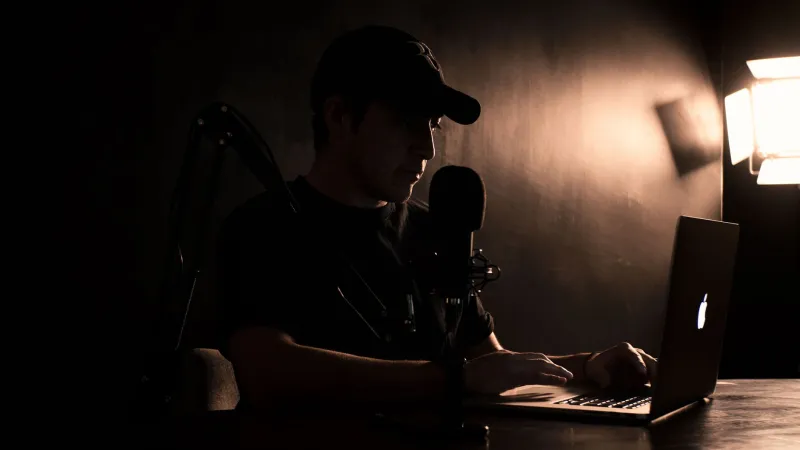
Picture this: you hit that "Go Live" button for the first time. The viewer count reads zero. Maybe one person pops in, realizes they clicked the wrong thing, and bounces. And then it's just you, a camera, and a whole lot of silence.
Most people would call that a failure. But a surprising number of streamers who've built real, thriving communities say that empty room was the best classroom they ever sat in.
Turns out, obscurity isn't a bug. It might be the whole feature.
The Pressure Nobody Talks About
When you already have an audience, every creative decision carries weight. Change your format? People complain. Try a new segment? You're risking the engagement numbers that took months to build. The bigger the following, the heavier the invisible rulebook becomes.
But when nobody's watching? That rulebook doesn't exist yet.
Take Marcus, a variety streamer out of Atlanta who now pulls consistent numbers on his channel. He spent his first three months broadcasting to what he calls "the void." No followers, no chat, no pressure. "I tried everything," he says. "I did cooking streams, I played games I genuinely liked instead of whatever was trending, I ranted about documentaries. Some of it was terrible. But I figured out who I actually was on camera without anyone judging the process."
That trial-and-error phase — the messy, unpolished, experimental stretch — is something creators with existing audiences rarely get to experience honestly. They're too exposed. For Marcus and streamers like him, the empty early days were basically a free creative residency.
Algorithms Can't Chase What Isn't There
Here's something worth sitting with: when you have no followers, you also have no algorithm working against you. You're not chasing click-through rates. You're not obsessing over whether your thumbnail color is optimized. You're not making content for a machine — you're just making it.
Jessica, a lifestyle streamer based in Portland, remembers her first weeks live as genuinely liberating. "I wasn't refreshing my dashboard every five minutes because there was nothing to refresh," she laughs. "I was just streaming. I talked to my dog on camera. I showed people how I organized my apartment. I had no idea what my 'niche' was supposed to be."
Eventually, people started showing up — not because she gamed any system, but because what she was doing felt real. Her community grew around her actual personality, not a carefully crafted persona she'd built to satisfy a recommendation engine.
That's harder to manufacture when you start with a crowd already expecting something specific from you.
Small Rooms Build Stronger Foundations
There's a dynamic that happens in tiny stream chats that just doesn't scale the same way. When you've got three people watching, you know all three of them. You learn their names. You remember that one of them is going through a rough week at work. You have actual conversations instead of managing a firehose of comments.
Those early viewers? They're not casual fans. They found you when you were nobody. That creates a kind of loyalty that's genuinely hard to replicate later.
DeShawn, who streams music production from his home studio in Nashville, puts it plainly: "My first ten regulars are still in my community two years later. They feel ownership over what I built because they were there before it was anything. That's not something you can buy."
The relationships formed in the small-audience phase tend to be more durable, more reciprocal, and more human than the follows you rack up once you've gone viral. Virality brings volume. Early obscurity builds depth.
You Get to Fail Without Consequence
Every creator has bad streams. Awkward silences, technical meltdowns, segments that fall completely flat. The difference is whether those failures happen in front of five people or five thousand.
Starting from zero gives you a grace period that's genuinely priceless. You can bomb a bit, recover, and try again — all without a single screenshot making the rounds or a comment section full of people who "remember when you were good."
Comedian and streamer Priya, who built her following doing improv-style live content out of Chicago, describes her first two months as "a masterclass in failing fast." She tried three different formats, two different time slots, and one deeply misguided attempt at a cooking segment before she found her rhythm. "If I'd had a big audience watching all of that, I probably would've quit," she says. "The anonymity let me be bad at it long enough to get good."
That's not a small thing. The ability to iterate without public consequence is something most professionals in any creative field would pay for.
How to Actually Use This Phase Well
If you're in those early, quiet days right now, here's the move: treat it like a lab, not a waiting room.
Experiment aggressively. Try formats you're genuinely curious about, not just the ones that seem like they'd perform. Stream at different times. Go long, go short. Get weird.
Document what feels good. Not just what gets views — what feels energizing to you. The streams where time flew by. The topics that made you forget you were even broadcasting. That's your signal.
Talk to the few people who show up. Don't perform for an imaginary future audience. Be present with whoever's actually in the room. Those early relationships are worth more than they look like on paper.
Resist the urge to copy what's already working for someone else. Big creators are optimizing for their existing audiences. You don't have one yet, which means you have total latitude to figure out what's actually yours.
Set a timeframe, not a follower goal. Give yourself 60 or 90 days of pure experimentation before you start worrying about growth metrics. That window is a gift — use it.
The Empty Room Is a Rare Thing
At some point, if you keep showing up, the room fills up. And that's great — that's the whole point. But once it does, you lose something you can't get back: the total, unmonitored freedom of being unknown.
The streamers who thrive long-term aren't usually the ones who blew up overnight. They're the ones who spent real time in the quiet phase, figured out who they actually were on camera, built their first real relationships, and created something with actual roots before the growth started.
Starting from nothing isn't a disadvantage you need to overcome. It's a window that eventually closes. The smartest thing you can do is climb all the way through it before it does.